Death To Nonchalance
I’ve taken WAY too much time off from writing and I apologize. I care.
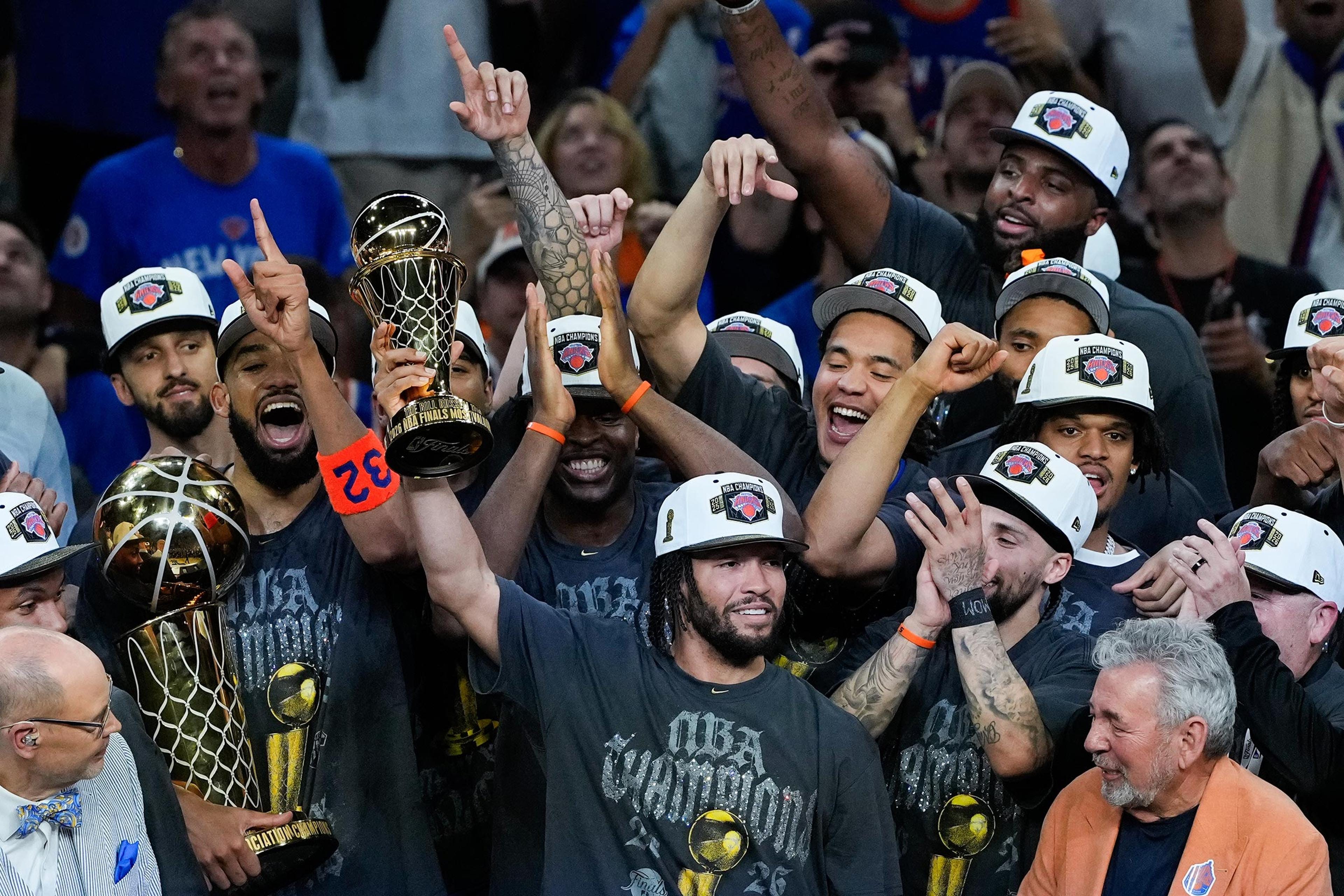
The New York Knicks just won their first title in 53 years.
Hey guys, it’s Fran. It’s been way too long, and I’ve had this one in drafts for two weeks.
Last night was the kick-in-the-ass reminder that I have almost 400 subscribers who read this newsletter and could benefit from an article that reminds us to fight against the mainstream line of thoughts.
Sometimes, they apply to health and wellness. Today’s is more general, so apply it however you choose.
I’ve noticed over the last few years that there is a movement towards being more nonchalant. Not caring. And moving through life as if the things that are supposed to be hard, difficult, and felt deeply, shouldn’t be felt that way.
Like any social trend, it’s hard to pinpoint exactly where it started. Social media amplifies it, newsletters popularize it, legacy media probably feeds into it. That doesn’t matter so much for today’s post.
What matters is how easily it may have infected our peers. If you’ve been invested in anything seriously for the past few years, struggled with it, and have been met with a “why do you care so much,” or “just don’t let it bother you!” Then you know what I mean.
This isn’t a good thing. Pretending not to care, acting nonchalant about everything, or distracting yourself from your stress over something takes away the essence of reward.
What we’re talking about today
Why the Knicks are a perfect example of trying and caring being cool again
Ways I’ve seen it in my own life
Strategies for negating the nonchalants
Jalen Brunson’s Legacy
When I think about what happened last night in San Antonio, I get fired up. The New York Knicks have united New York during their playoff run like no sports team I’ve ever seen.
The ‘07 and ‘11 Giants could never, sorry, David Tyree. The ‘09 Yankees were special. But nothing tops this. 53 years separate their previous championship from last night’s. The city saw endless years of terrible teams from 1999 until now, and a few teams who felt good enough but never quite pulled it off.
Even more inspiring was the passion of Knicks fans every year throughout that time. Ask any of them who watched the playoffs the last 10 years and they could tell you exactly why they fell apart and why the previous iterations didn’t work.
They care. That’s why this playoff title feels so loud. I’d wager that none of them switched teams, even in the worst of years.
Then there’s the players. Karl Anthony-Towns endured years of almost-good-enough in Minnesota, got called “soft” by former teammates, and lost his mother in 2020.
Mikal Bridges got heckled for his shooting form and worth to the team because of the hefty price the Knicks paid to acquire him. Josh Hart has bounced from team to team trying to find a place where his brand of basketball leads to wins.
And Jalen Brunson, who the Knicks also offered a big contract, was met with some criticism for a ton of things.
“He’s too small…they [The Knicks] overpaid for a short guard…short guards can’t win championships..” and many others.
Brunson arrived from a Mavericks team where he came off the bench in a supporting role. Turning that kind of player into your main guy is a risk in the NBA, to say the least.
But it’s not impossible. Brunson cared about proving those people wrong and proving his front office right. If you watch any of his press conferences over the years — definitely watch his Finals ones, if you want the best of them — he speaks with an air of confidence that is rare these days.
Many superstars try to make things look effortless. A lot will try and hide their true passion and not give long-winded, meaningful answers to reporters. As a former sports journalist, I saw it first hand. It’s not just that journalists want to bait out the best quotes; some superstars thrive off of looking like they don’t care and giving off a mystique of nonchalance.
Not Brunson.
Before yesterday, a video of Brunson and his father, Rick, training together in Jalen’s childhood went viral and had mixed feedback.
Rick is now the assistant coach of the Knicks and is reliving that video in real time. It’s hard to find a comment under that video now that isn’t supporting their father-son dynamic. Rick cared.
So did his mother. The nonchalance that can sometimes be applied to parenting might need a second look, too, when you see how Jalen turned out.
Jalen Brunson’s seasons this year was one where he was constantly playing against taller guards who by all measures should’ve been able to defend him well.
They didn’t.
Even San Antonio’s guards who roughed him up all series didn’t stop him from averaging almost 30 points over five games.
You can see how much he and the rest of the Knicks cared last night when the final buzzer sounded.
Tears. Raw emotion. Smiles and hugging. All things that the nonchalant movement would deem “cringy” or “weird.”
That level of investment in something you’re passionate about shouldn’t be frowned upon. It should be celebrated. The reason that the Knicks’ victory felt as special as it did is because they cared so much.
If they weren’t as invested in winning the championship this year and went about it like they weren’t worried, they wouldn’t have made it past Atlanta.
Which Baskets I’m Currently Putting My Eggs In
During my newsletter hiatus, I ran the perimeter of Manhattan with five of my friends who I’ve bonded with almost exclusively through running and physical activity.
I spoke to them about my Hyrox races and how much time and training I’ve put into them over the last year.
Instead of asking me why I spend so much time on a sport that “isn’t really a sport” (not my critique) or challenging me on my stance on it, they said “that’s so awesome that you found something that you’re passionate about.”
Immediately I knew they weren’t the nonchalant type.
“More people need to obsess over things for a little bit,” said my friend and fellow Substacker rachel. “It’s missing from today’s world. It’s so cool to see people try hard at things they love.”
I couldn’t have agreed more.
I understand giving up pursuits that aren’t reaping any rewards. There is a level of humility required in doing hard things that requires taking a step back and assessing risk and reward.
But that period comes LONG after a bit of trial and error. Investing HARD into something and finding passion in it requires a bit of falling on your face, getting up and going back to it.
I’ve found something that I really enjoy in Hyrox that allows me to feel like an athlete again, which is a feeling that hard to describe. Being a professional athlete was a dream of mine for a long time. I’m still okay with the fact that I might never make it to the Elite tier of Hyrox competition.
..But why can’t I try and find out?
I’m tired of 30-something-year-old fitness professionals who haven’t realized their full physical potential saying things like, “calling yourself a marathoner is wrong. You run marathons, you’re not a marathoner.”
Why would someone who aspires to be competitive at marathons sell themself short at that label? I know people who are on the cusp of semi-elite times in endurance sports. They are ATHLETES.
They care deeply about what they do, even if they have day jobs.
I wouldn’t dare dabble in the semantics of labeling them anything else because I respect their level of CARE.
I’m fine with making this sport a part of my identity for a brief period of my life.
It doesn’t have to be my whole identity.
I’m still a husband, a son, a coach, a mentor, a salesman.
I am able to be passionate and care about what I love without letting it consume me to the point of being unhealthy. I’m here to tell you that you can, too.
How to Care More About Sh*t and Get The Most Out of Life
If you’ve decided you’re really about something and want to pursue it, this is your confirmation to go ABSOLUTELY ALL IN on it.
Not only that, but you should let everyone know about it.
Why? You’ll find out who is really going to be your support system in the pursuit — which is an extremely important part of caring hard about something — and who will find it cringe.
If you haven’t found what you’re really passionate about, that’s okay too. It takes some time to pick the thing you’re going to invest a year or three of your life into. It’s okay to deliberate for a bit, especially when you consider how much it could affect the trajectory of your life.
You also have to be in a place in your life where you won’t be too distracted or pulled in too many directions by other things. This part is infinitely harder in the digital age.
Along with people trying to popularize nonchalance, some have made it a trend to try to do a ton of things. That’s all fine and dandy, and can maybe help people narrow down what their passion is.
But it can also be a trap in distracting someone from doing their Most Important Thing (MIT).
Having your MIT at the forefront of your day is essential. You can’t get lost in the social media scrolls, the front page news, or the text messages from people asking you to commit to 10,304 different things.
If it’s training for your first marathon or to become a marathoner, the daily run needs to become a priority. If it has to happen at 7pm on Saturday, then so be it.
You have to be willing to endure the questions from friends and colleagues about why you’re running at that time, why that run matters, and why the MARATHON.
There’s nothing wrong with wanting to run a marathon and wanting to run it well.
Finishing one in general deserves praise, but the person who really invests in getting the most out of their body from the experience is just going to have a little bit more of my respect, personally.
And it’s that level of caring for things that elevate the behaviors of your peers around you.
When you’re around a collective of people who really give a sh*t about something, it fires you up (or, at least it should).
Making something your temporary identity might get you laughed at, but the point of this newsletter is to help you use that laughter as fuel for the fire.
Lots of people get discouraged by the laughter and mocking. It brings up some childhood trauma, maybe evokes emotions of being exiled, and just generally doesn’t feel good.
I hope is that you can rewire your brain to take that negative feedback and turn the slights into ammo for “I told ya so’s.”
Michael Jordan ironically got memed for this kind of behavior in the Netflix series “The Last Dance.”
But looking at Jordan’s résumé, it’s no coincidence that employing this strategy was arguably what got him into immortal superstardom.
Every good story needs a villain.
Right now, I think the villains are the nonchalant people.
If your story (or a new chapter in it) is still taking shape, maybe your villain is the person telling you that what you’re doing is too ambitious or not worth it.
Let’s have an amazing week.


