We Should Be Concerned About Gerontocratic Leaders
Public health is not something that should be governed by those who are stepping their first step on the stairway to heaven.
For as long as you’ve known me to write this newsletter, I rarely ever get too political.
But comments made weeks ago about the current president’s fitness for office had me a little alarmed.
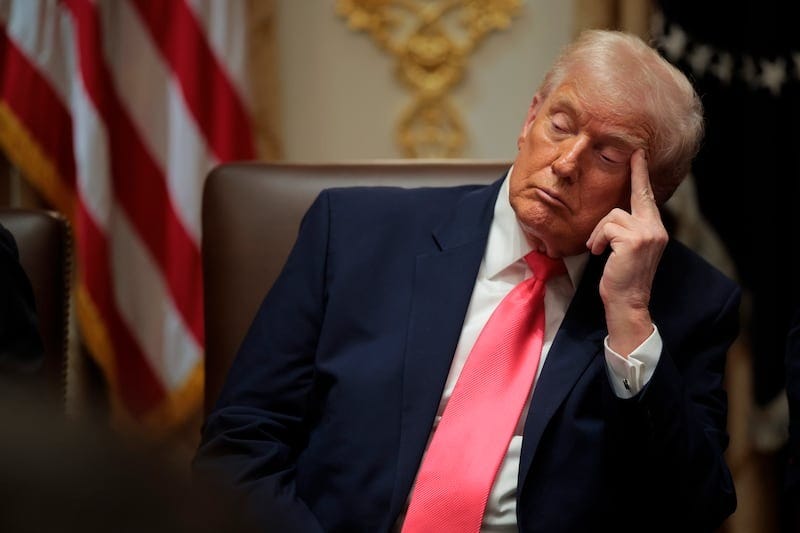
When questioned about his mental and physical ability to do his job — a valid question for anybody over the age of 75 running the country — President Trump suggested it would be “treasonous” to allude to him having health issues.
I’m no expert on geriatric health, but I’m fairly certain that falling asleep at meetings, jumbling words, and displaying a clear lack of memory and comprehension warrants some questions.
To be totally equanimous, I felt the same way about our previous president long before the debate showed how cognitively out of shape he was.
But at least Biden never threatened people who questioned his fitness.
What does it say about our nation? That half of us would choose to disagree (on either side of the aisle) that the leader we elected is losing his marbles?
To me, it says what I very bluntly think often but haven’t put into words:
We as a nation don’t have a good grasp of what “healthy” is, both for ourselves and our fellow citizens.
Newsletter Summary:
Why our nation won’t change until we start caring about real health issues
What I think we should start doing to ensure we (and our leaders) stay accountable
What’s a Gerontocracy?
It’s what we live in — a nation governed by older adults (65+ years old, in most states!) who would be happily retired in most other countries.
Before claims of ageism come, let me just paint some background here for us:
There’s nothing inherently wrong with older people holding government office, but
The United States ranks 8th among the countries in the world with the highest dementia and Alzheimer’s rates
The countries listed ahead of the U.S. have generally longer lifespans across the board (and younger politicians, from what data is publicly available
The average age of U.S. politicians and legislators is 64.1, according to BGIPU.org
Most neurological decline starts around age 65 for the average American
While there are plenty of fit, capable older adults in the U.S., politics these days isn’t a job where many participants in the field sleep comfortably.
Lack of sleep is heavily correlated with neurological disease, and while it might be jumping to conclusions that all politicians are sleep-deprived, it’s not crazy to think that we have an epidemic of unfit-for-office politicians from state to state.
So with the above statistics in mind as plain facts, is it really treasonous to ask whether or not our country should be governed by somebody under the age of 70?
The sitting president seems to think so, and that’s a problem.
Because how are we as a nation supposed to be transparent about our own health issues if the person running the country can’t be?
Disregarding whatever health issues he may be dealing with — and come ON, he’s dealing with some, he’s pushing 80 in the most stressful job in the world — sets a bad precedent for dealing with our own issues.
Among older adults, health neglect is an issue that leads us to an uncountable amount of deaths because of unreliable data.
Generationally, it is the “pull-yourself-up-by-the-bootstraps” mentality that leads to these cases.
“I’m fine — I don’t need a doctor. I’ll solve [insert health problem here] myself.”
We have a chance to change that and be more proactive about preventing disease everywhere.
But a president normalizing shrugging off serious health issues (for TWO consecutive administrations here in the U.S.) is not leading by example.
Radical Ideas for Changing Public Health
RFK has been all talk as health secretary. There were things about his “policies” (which we can just call “ideas” at this point, since none of them have taken shape) that enamored voters, but he hasn’t done anything meaningful yet.
Aside from his recent post about putting gyms in airports, there hasn’t been anything even remotely exciting about his term in the first year.
Something I think we could all benefit from is a federal exercise tax credit — a system where a small portion of gym memberships or wellness spend is reimbursed every tax season, provided people actually use it.
Obesity is the number one health issue in America right now — well, technically it’s cardiovascular disease and cancer, but these are co-occurring morbidities — and there aren’t enough incentives for Americans to get healthy right now.
Hell, maybe we even give it to some of the patients spending thousands on semaglutides, too. At this point, any weight loss spending should be supported with an idea like this.
Another idea would be putting funding from the Big Beautiful Bill into building free community-based fitness centers in rural areas (or bolstering the resources of already existing ones!) to get more people moving.
Independent gym owners these days have to compete with franchises that make money off recurring memberships that get forgotten about en masse, making it hard to keep business growing.
Reinvesting federal funding into American-owned fitness businesses sounds like it’s exactly up this administration’s alley, but alas, they’re too busy deciding whether food dyes should exist and where to plaster their names on national monuments.


